Breast cancer first entered my life when I was in 8th grade. My mom was diagnosed at age 41—and just a year later, she lost her battle.
That moment changed everything. My dad, my two sisters, and I were left to navigate life without her. I was left with a fear that would quietly shape my future.
When I was 18, I found a lump in my breast. It was removed and, thankfully, benign. In my early twenties, I took the BRCA test and tested negative. That gave me some peace of mind throughout my 20s and 30s. I clung to that result like a safety net.
At 39, I had my first mammogram. Like many women, I was told I had dense breast tissue, and they recommended an MRI. I wasn’t overly concerned—until the nurse called:
“Hi, you have a spot on your left breast they’d like to biopsy, and another area we want to monitor. I’ll call in the order.”
She hung up. Just doing her job.
But I stood frozen in my kitchen, suddenly overwhelmed. I felt sick. I sobbed. I was not going to let history repeat itself.
A year before that call, I had a conversation with a stranger who happened to be a breast cancer specialist from Mayo Clinic in Jacksonville . Almost jokingly, I asked if it was crazy to consider a preventative mastectomy with my family history.
“Absolutely not,” he said.
Those words stayed with me. After my biopsy came back non-cancerous, I decided I wanted to be proactive. I wanted to take control of my story.
My first consultations didn’t go well. The breast specialist didn’t understand my concerns, and the plastic surgeon discouraged me about how I’d look after surgery.
Then I got a referral to Magnolia Breast Health to see Dr. Patterson. She reviewed my history, looked me in the eye, and said:
“You are 100% a candidate for this surgery, and insurance will cover it.”
Tears of relief filled my eyes. She saw me. She validated everything I was feeling.
I also met with Dr. Holmes, one of the plastic surgeons she works with, and received the same level of care and confidence. I had found my team.
In September 2024, I had a six-hour surgery to remove all my breast tissue and place spacers. I was home the same day, my husband by my side.
My chest looked like a vacuum-sealed Amazon package, and the surgical drains made me feel like an octopus—but I was grateful.
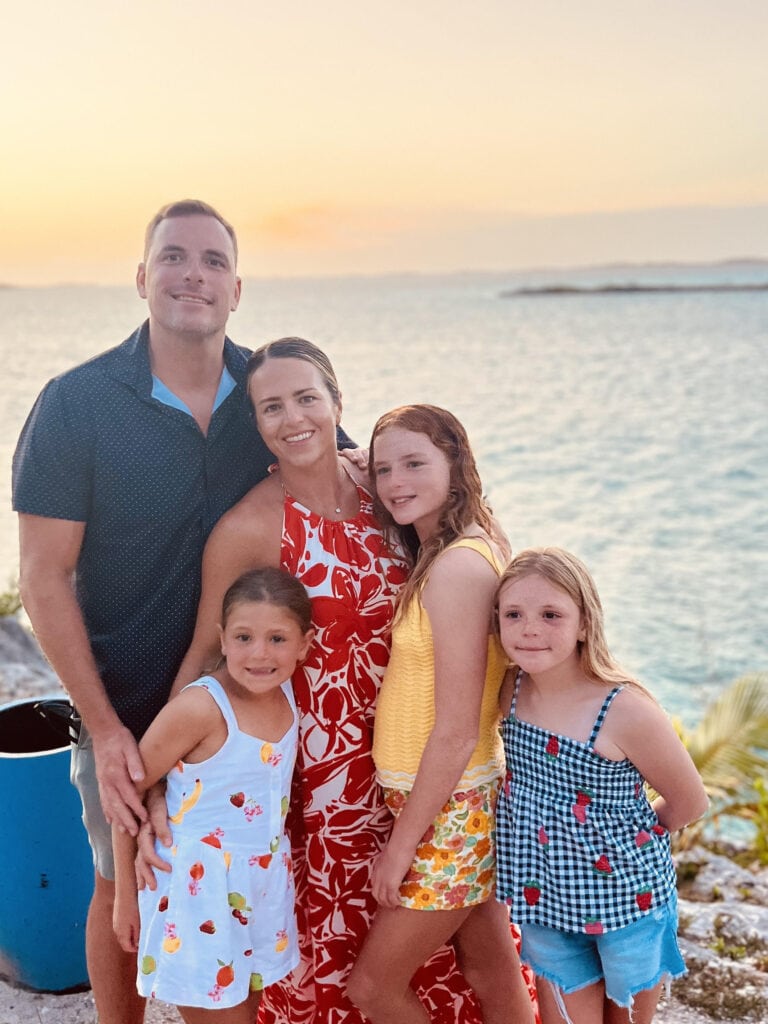
The hardest part of recovery wasn’t the pain—it was the stillness. As an active mom of three girls, slowing down was a challenge.
In November, Dr. Holmes placed my implants. The second procedure was much easier, and I recovered quickly. The emotional weight had already been lifted.
Now, I sit by the pool watching my daughters at swim practice. My heart is full.
I’ve reduced my breast cancer risk to just 2%. I know we can’t control the future, but we can make choices that shape it.
I’m grateful I trusted myself, even when early doctors didn’t. I got a second opinion. I kept pushing.
People have asked, “Isn’t that extreme? You don’t even have BRCA.”
But tell that to the 14-year-old girl who watched her mom be taken off life support.
No, it wasn’t extreme for me. It was right.
To anyone facing hard choices—I’m sending you love, strength, and the courage to advocate for yourself.
You know your body. You know your story.
Trust yourself.
– Aimee Pokorny